
Adverbs of frequency help to show how often you do something. They're a great way to talk about how much experience you've had doing something, or how you spent most of your time in the past. What's something you do often? Tell me in the comments!

Adverbs of frequency help to show how often you do something. They're a great way to talk about how much experience you've had doing something, or how you spent most of your time in the past. What's something you do often? Tell me in the comments!

Many students have difficulties deciding between using will, be going to and present continuous, as all can be used for the future. Present Continuous Often present continuous is used to talk about confirmed plans that you've made with someone else. This someone else could be an organization, friend or family. We can also use it… Continue reading Talking about Plans: Which future do you use?

The passive is something that is used when we want to take away the emphasis from who does the action within your sentence. Let's have a look. An active sentence clearly shows the subject or the doer of the sentence: I marked the papers last night. = our verb here is marked, and the person… Continue reading When and how to use the passive

You may have heard of used to when talking about the past, but have you also learned how to use would? Let's look at the rules. Used to can be used to talk about something that happened (usually multiple times, or often) in the past, that has now changed. For example: I used to smoke,… Continue reading Used to and Would for Past Experiences

Sometimes it can be a little tricky to use for and since with present perfect, so let's have a look at how it can be done! Photo by fauxels on Pexels.com First, let's talk about the present perfect. To make it, we need: subject + have/has + past particle. Our subject could be a person… Continue reading Present Perfect: for and since

If you haven't read through the first two posts about gerunds and infinitives check out the first one here, and the second one here! Generally speaking, there are some verbs that generally go together (or collocate) with gerunds or infinitives. Here's a neat little list of verbs that come before a gerund: anticipate, appreciate, avoid,… Continue reading Gerunds and Infinitives Part 3: Verbs that use gerunds and verbs that use infinitives

If you haven't yet, check out the first post on gerunds versus infinitives. It gives some ground rules for when to use gerunds and what they are. 🙂 On to infinitives! An infinitive is usually made up of the verb with to- to go, to eat, to sleep, to wonder, etc. We can call the… Continue reading Grammar Help: Gerunds and Infinitives Part 2! Rules for Infinitives

Gerunds, generally, can be confusing- let's look at what they are: A gerund is a verb in ing form (going, running, skiing, eating) but it's being used as a noun. This means it's not part of a continuous tense (I am going, I was going, etc) but rather it's a thing on its own. Compare… Continue reading Grammar Help: Gerunds Part 1: use with prepositions

If you're studying for the CAE or the IELTS exam, you'll know that it's not always easy to show the difference between informal and formal writing conventions. Making sure your letters sound appropriate, doesn't have to be that hard. Try to keep the following things in mind when writing: Who is my audience? This means… Continue reading Writing Help: Letters- what to consider
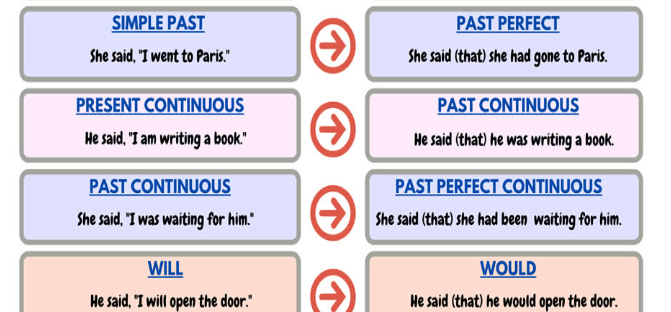
Reported speech is an interesting one- when to use it, how to use it and how to make it can be a little tricky at times. Let's have a look at some basics. We use reported speech to repeat or report what someone else has said. Often this is used when we're telling a story… Continue reading Grammar help: Reported Speech
 English Class with Heather