

Some students, especially those who have learned English mainly through watching movies or playing video games, struggle with spelling words correctly in English. I’m here to tell you that native speakers can struggle with spelling, too. I am a terrible speller, I always have been, and I’m sure if you go through these blog entries, you’ll find more than a few spelling mistakes! I have learned some tricks over the years to help (both myself and students) improve my spelling accuracy, and I’d like to share some with you.
Think of the sounds.
This may be one of the more difficult pieces of advice in English, because the language is not transparent, meaning often you don’t write exactly what you hear. English can be considered a more opaque language, meaning that often one letter or combination of letters can have many different sounds. This is particularly interesting when it comes to bilingual learners and learners with dyslexia. That being said, there are some more common letter combinations that you can learn to help you get the spelling right more often. Pronunciation guides like this one can help you learn how sounds are commonly spelt. This can help you write words you hear more clearly. Making notes of words you find particularly hard to spell or hard to pronounce can help you as well.
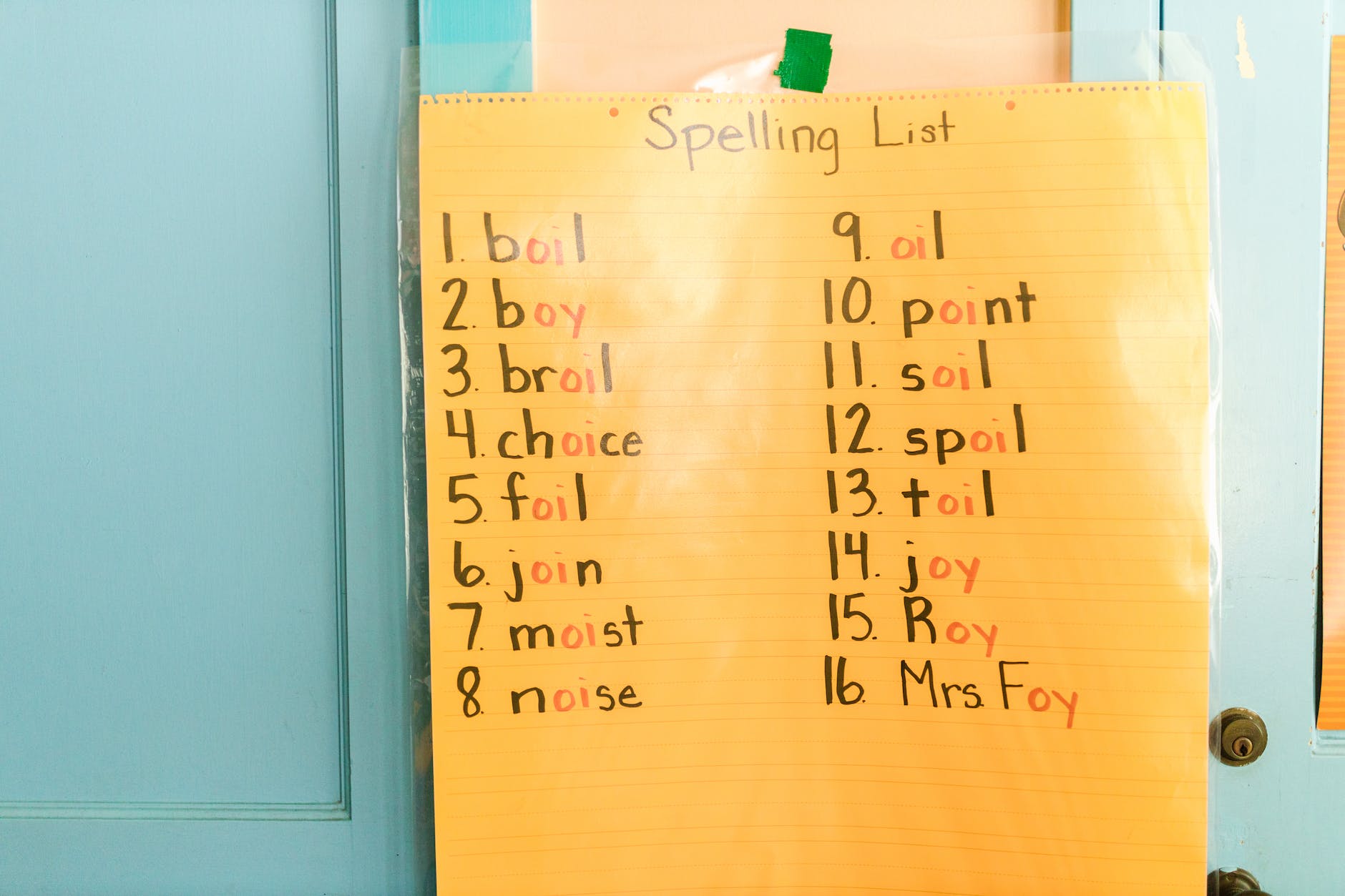
Test yourself.
Did you have to do spelling tests when you were a kid? I did and I hated them because I always scored poorly. Once I started understanding the importance of studying and practising the different words I was supposed to learn, I started doing better, and my confidence improved. Try taking 5 words a week, and when you’ve got some free time (maybe while on the way to work, during a coffee break, or in the shower), practice writing and saying them throughout the week. At the end of the week, give yourself a little test to see what you’ve remembered (and a little reward for putting in the work as well). Gradually increase the amount of words as you feel comfortable, bring old words back into practice to make sure you’ve remembered them, and try bigger and more complicated words as your confidence grows!
Make it a game.
Games aren’t only for kids. There are some amazing resources online for spelling practice, that you should take advantage of at any age. For more advanced practice, try completing the daily wordle, or games that are similar to challenge yourself every day. See if you can find a copy of scrabble, and challenge some friends one rainy weekend. If it’s fun, you’ll enjoy doing it, and if you enjoy doing it, you’ll keep doing it. Just because you’re not a child, doesn’t mean you shouldn’t have fun while you study!
What’s the hardest word for you to spell in English? Let me know in the comments.

 English Class with Heather