
Reported speech is an interesting one- when to use it, how to use it and how to make it can be a little tricky at times. Let’s have a look at some basics.
We use reported speech to repeat or report what someone else has said. Often this is used when we’re telling a story and want to quote someone, if someone mishears what someone else has said, or in news and media reports. I use it the most when I’m repeating what someone has said but the intended listener couldn’t hear it (my mum’s hearing isn’t the best). An example:
Dad: ‘Do you want hamburgers for supper*?’
Mum: ‘What?’
Dad, louder: ‘Do you want hamburgers for supper?’
Mum: ‘I can’t hear you.’
Me, breaking the sound barrier: ‘Dad asked if you wanted hamburgers for supper.’
Let’s look at how I’ve created reported speech in this instance.
Original: Do you want hamburgers for supper? -As this is a question, I can use the verb ‘ask’ as a reporting verb here.
Reported speech: Dad asked if you wanted hamburgers for supper.
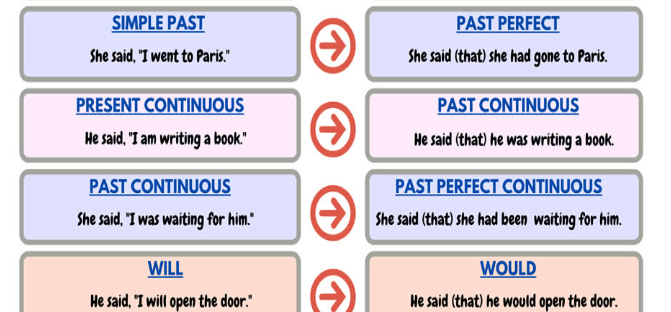
We’ve added the speaker, a reporting verb, if (as it’s a yes or no question) and we’ve put our original verb (want) one step in the past. Generally, we go one step in the past for reported speech. Here’s a great table from MyEnglishPages that demonstrates this:
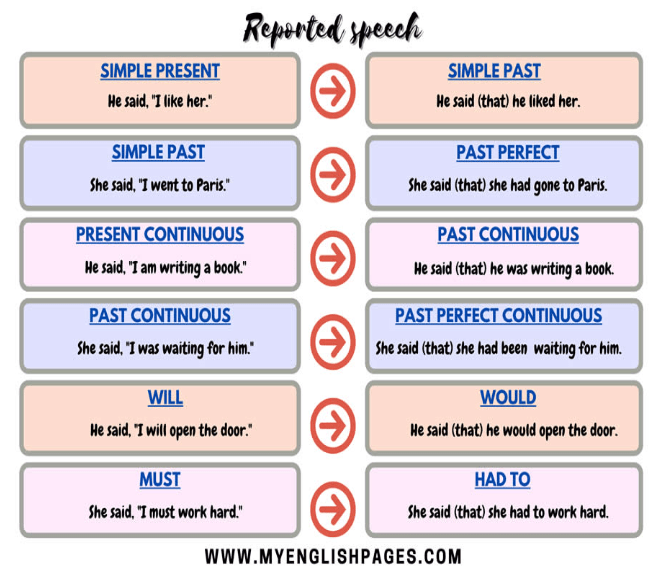
When we aren’t asking yes or no questions, we don’t need the if and we can replace it with ‘that’ if we wish. For example: ‘We’re having hamburgers for supper,’ becomes ‘She said (that) we were having hamburgers for supper.’ Something important to note, with continuous tenses that when they’re contracted you’re not going to notice the tense change necessarily- We are- we’re, We were- we’re :D. Keep your ears open!
How would you use reported speech?
*supper here could be replaced with dinner- it’s what my family calls the evening meal 🙂

 English Class with Heather